

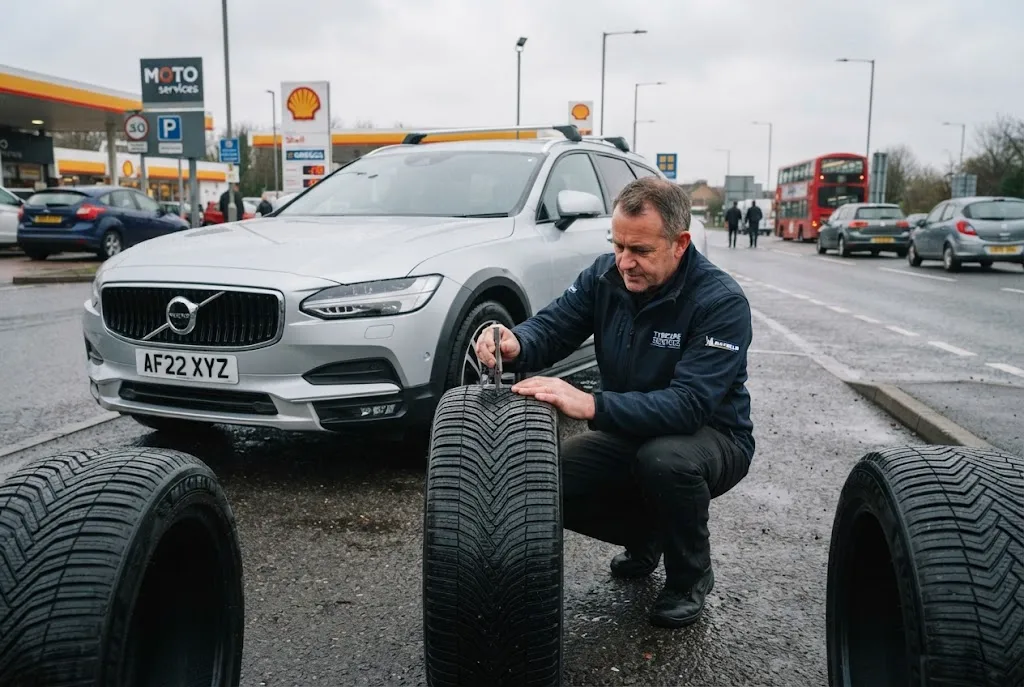
Reliable tyre services play an important role in keeping vehicles safe and roadworthy across Britain. Tyres are the only part of a car that remains in direct contact with the road, so their condition can affect braking, steering, handling and grip in changing weather. Regular checks, professional tyre fitting, timely repairs and replacement can help drivers identify problems before they become more serious.
For British motorists, tyre safety matters throughout the year. Wet roads, cold temperatures, standing water, long motorway journeys and seasonal changes can all place different demands on tyres. Understanding when to inspect them and when to seek professional help can make everyday driving safer and reduce the risk of avoidable breakdowns.
Why Tyre Services Matter for British Drivers
Tyre maintenance is more than simply replacing worn rubber. A good tyre service can cover inspection, pressure checks, tyre fitting, puncture assessment, wheel-related checks and replacement when a tyre is no longer suitable for safe use.
Drivers should also remember that having a valid MOT does not automatically mean a vehicle remains safe to drive. GOV.UK states that motorists are responsible for ensuring their vehicle is roadworthy at all times, including checking that tyres have the correct tread depth and are free from cuts and defects.
This makes regular tyre inspections particularly important between MOT appointments. A tyre can deteriorate through normal use, suffer damage from potholes or kerbs, or develop uneven wear without immediately producing an obvious warning on the dashboard.
Understanding Tyre Safety Requirements
For cars, light vans and light trailers, the legal minimum tread depth is 1.6mm across the central three-quarters of the tyre and around the entire circumference. Tyres must also be correctly inflated to the vehicle manufacturer’s specification and should be free from relevant cuts and defects.
The legal minimum should not be treated as a target for routine maintenance. Drivers should inspect their tyres regularly and consider getting professional advice if tread is becoming low, wear is uneven or the tyre shows visible damage.
Tyre condition is also relevant during an MOT. The MOT inspection checks tyre condition, security, size and type, tread depth and, where applicable, the tyre pressure monitoring system.
How to Check Your Tyres at Home
A basic visual inspection does not replace professional tyre services, but it can help drivers identify obvious problems early.
Check the Tread
Look across the tread rather than checking only one small section. Uneven wear can indicate problems that are not obvious from a quick glance. The legal minimum for most cars is 1.6mm across the central three-quarters of the tread.
A simple tread-depth check can be carried out using a suitable gauge. Some drivers also use the familiar 20p test as a quick screening method, although a proper tread-depth gauge gives a more precise measurement.
Look for Cuts and Bulges
Inspect the sidewalls and tread for cuts, cracks, bulges or other visible damage. Pay particular attention after hitting a pothole or kerb. A tyre that looks damaged should be assessed by a qualified professional rather than assumed to be safe because it is still holding air.
Check Tyre Pressure
Incorrect pressure can affect handling, tyre wear and fuel efficiency. Check the recommended pressure in the vehicle handbook or the manufacturer’s information and make sure the measurement is taken according to the manufacturer’s guidance.
TyreSafe recommends checking tyre pressures at least monthly and before a long journey. Checking when the tyres are cold can provide a more meaningful reading.
When Tyre Fitting Is Necessary
Tyre fitting should be carried out when new tyres are installed or when an existing tyre needs to be removed and replaced. Professional fitting helps ensure that the tyre is correctly mounted on the wheel and inflated to the appropriate pressure.
Drivers should make sure the replacement tyre is suitable for the vehicle. Size, load rating, speed rating and manufacturer recommendations can all matter when choosing a replacement.
After fitting, it is sensible to check that the tyres are correctly positioned and that any relevant tyre pressure monitoring system is functioning normally. Professional technicians can also identify issues that may not be apparent during a simple visual inspection.
Tyre Replacement: When Should You Act?
Tyre replacement becomes necessary when a tyre is worn beyond the legal limit, damaged beyond safe repair or otherwise unsuitable for continued road use.
Replacing tyres before they become an urgent problem can also make financial sense. Waiting until a tyre fails completely can create inconvenience, particularly if the problem occurs during a motorway journey, at night or in poor weather.
Drivers should not rely solely on mileage when deciding whether tyres need replacing. Two vehicles can use similar tyres for very different periods depending on driving style, road conditions, mileage, vehicle loading, storage and maintenance.
Are Tyre Repairs Always Possible?
Tyre repairs can sometimes be appropriate for certain types of puncture or damage, but not every damaged tyre can or should be repaired. The location, size and nature of the damage need to be assessed before a decision is made.
A slow puncture should not simply be ignored because the tyre can be repeatedly inflated. Repeated pressure loss can indicate a puncture, valve problem, wheel issue or other fault that requires investigation.
Sidewall damage deserves particular attention because the sidewall performs an important structural role. If a tyre has a significant cut, bulge or other serious defect, professional assessment is the safest approach.
Tyre Services and Seasonal Driving in Britain
British driving conditions can change quickly throughout the year. Rain, standing water, cold mornings and occasional snow or ice can all affect how a vehicle behaves on the road.
TyreSafe notes that cold, damp conditions can reduce tyre performance and advises drivers to carry out regular winter checks. It also recommends checking pressures before long journeys and inspecting tyres for cuts, cracks, bulges and embedded objects.
Spring and summer should not be treated as maintenance-free seasons either. Heavy rain can create standing water and increase the risk of aquaplaning, particularly when tyres are worn or incorrectly inflated. Regular checks remain useful regardless of the season.
Tyre Safety Before a Long Journey
A long motorway journey is a good reason to inspect tyres before setting off. A few minutes spent checking them can help identify an issue before the vehicle is travelling at higher speeds or far from home.
- Check the pressure of all tyres according to the manufacturer’s recommendations.
- Inspect the tread for excessive or uneven wear.
- Look for cuts, cracks, bulges and embedded objects.
- Check that the tyres appear suitable for the vehicle.
- Make sure any warning related to tyre pressure is investigated.
- Arrange professional tyre services if you notice damage or unusual wear.
Drivers carrying heavier loads should pay particular attention to the manufacturer’s recommended tyre pressures for the vehicle’s load. The vehicle handbook or manufacturer’s information should be used rather than relying on a generic pressure figure.
How Tyres Affect Roadworthiness
Roadworthiness is a continuous responsibility rather than something that only matters when an MOT is due. GOV.UK advises drivers to check their vehicles regularly and specifically highlights tyre tread and condition.
Tyres that are under-inflated, badly worn or damaged can compromise the vehicle’s ability to respond predictably. Even when a problem does not immediately cause a breakdown, it can affect how the car behaves during braking, cornering or sudden manoeuvres.
This is why tyre maintenance should form part of normal vehicle ownership. Keeping tyres in good condition can complement other routine maintenance such as brake checks, servicing and fluid inspections.
Choosing the Right Tyre Service
When choosing a provider for tyre fitting, repairs or replacement, drivers should look for a reputable business with suitably trained technicians and appropriate equipment.
It is useful to explain the problem clearly and provide information about symptoms such as slow pressure loss, vibration, uneven wear or steering changes. A professional inspection can then determine whether the issue is limited to the tyre or may involve the wheel, suspension, steering or alignment.
Price is naturally important, but the cheapest option is not always the best choice when vehicle safety is involved. Drivers should make sure the tyres supplied are appropriate for their vehicle and that fitting is carried out correctly.
Tyre Services as Part of a Wider Car Maintenance Plan
Tyre care should not be considered separately from the rest of vehicle ownership. Regular maintenance can help drivers identify problems earlier and manage ownership costs more predictably.
For households planning their motoring budget, unexpected tyre replacement can be an unwelcome expense. This is one reason it can be useful to understand potential repair finance options when a necessary repair or replacement cannot easily be covered by the household budget.
Tyres can also become an important consideration when buying a vehicle. Drivers comparing used cars in Britain should inspect tyre condition as part of their overall assessment rather than focusing only on the vehicle’s bodywork, mileage and service history.
Likewise, anyone considering car finance should remember that monthly finance payments are only one part of the total cost of ownership. Tyres, servicing, insurance, fuel, repairs and other running expenses can all affect the real household cost of keeping a vehicle.
Final Thoughts on Tyre Safety in Britain
Good tyre maintenance is one of the simplest ways for British drivers to support safe and reliable motoring. Regular inspections can help identify low tread, incorrect pressure, uneven wear and visible damage before a small problem becomes a bigger one.
Professional tyre services can provide the specialist inspection, fitting, repair assessment and replacement support that motorists need when home checks are no longer enough. Most importantly, drivers should not wait for an MOT or a breakdown before paying attention to tyre condition.
By making tyre checks part of normal vehicle ownership and responding promptly to warning signs, motorists can make more informed decisions about tyre fitting, repairs and replacement while keeping roadworthiness firmly in focus throughout the year.
