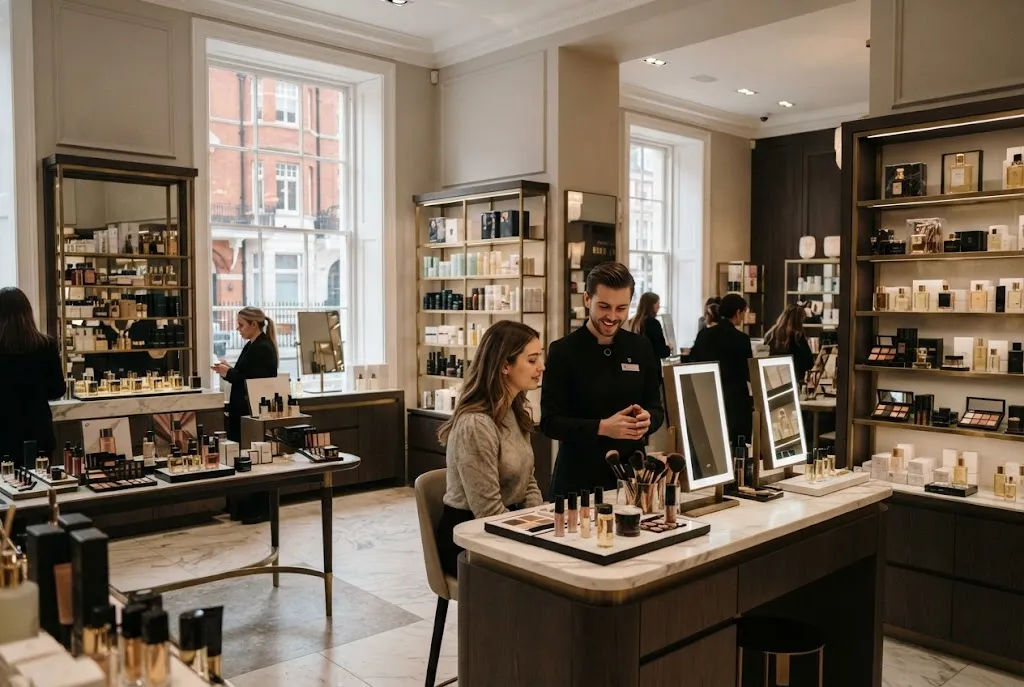
Beauty statistics UK data provides a useful snapshot of how consumers, businesses and retailers are shaping one of the country’s most diverse consumer sectors. From skincare and cosmetics to salons, fragrance and personal care, the UK beauty landscape covers a wide range of products and services. Understanding the latest figures can help consumers make sense of changing trends while giving brands and businesses a clearer view of the market.
The UK beauty sector is also broader than the products found on a cosmetics shelf. Official statistics track beauty businesses, employment, turnover and retail activity, while market research provides additional insight into categories such as skincare, colour cosmetics, haircare and fragrance. Together, these sources reveal a sector that continues to evolve alongside changing consumer preferences.
Beauty Statistics UK: What the Latest Data Tells Us
One of the most important points to understand about beauty statistics UK data is that there is no single measurement that captures the entire industry. Official business statistics, retail data and market research measure different parts of the sector.
The Office for National Statistics (ONS), for example, publishes data on businesses operating within defined beauty-related Standard Industrial Classification categories. Its latest beauty industry statistics cover enterprise counts, employment and turnover across specified UK geographies. This makes official data particularly useful for understanding the business side of beauty.
Market research approaches the sector differently. Cosmetics data can be divided into categories including skincare, colour cosmetics, haircare, fragrance and toiletries. These categories make it easier to identify where consumer spending is concentrated and how individual segments change over time.
How Large Is the UK Beauty Industry?
The phrase “UK beauty industry” describes a collection of interconnected markets rather than one narrowly defined business category. It includes manufacturers, retailers, independent beauty professionals, salons, online sellers, distributors and specialist service providers.
ONS publishes dedicated datasets covering the beauty industry and hairdressing and beauty treatment businesses. Its 2025 analysis includes information on the number of enterprises, employment, employees and turnover, providing a more detailed picture of businesses operating in the sector.
This business structure is significant because the UK beauty economy includes many smaller operators. Independent salons, freelance professionals, specialist retailers and emerging product brands can all contribute to the wider market without necessarily looking like traditional large corporations.
For anyone researching the sector, it is therefore important to distinguish between statistics about cosmetics sales and statistics about the wider beauty economy. The two can overlap, but they do not represent exactly the same thing.
Skincare Statistics Show Strong Consumer Interest
Skincare is one of the most closely watched parts of the beauty market. Products can range from everyday cleansers and moisturisers to targeted treatments, serums, masks and specialist formulations.
Recent market data tracks the value of the skincare market in Great Britain over a long historical period, allowing researchers to compare changes in consumer spending across years. Statista’s current dataset, based on Cosmetic, Toiletry & Perfumery Association data, covers skincare market value through 2025.
These figures are useful because skincare behaviour can indicate wider changes in how consumers approach beauty. Rather than viewing beauty solely as colour cosmetics or occasional treatments, many consumers now consider skincare part of an everyday personal-care routine.
The category also connects closely with broader conversations around ingredients, skin concerns, product quality, value and personalised routines. As a result, skincare remains an important area for both established companies and newer beauty businesses.
Makeup Statistics and Changing Beauty Habits
Makeup remains another important component of beauty market statistics. The category includes products such as foundation, concealer, mascara, lipstick, blush and eye makeup, as well as newer hybrid products that combine cosmetic and skincare functions.
However, makeup consumption should not be interpreted simply as a measure of how often people wear traditional cosmetics. Consumer behaviour can shift between product types, price points and retail channels. Social media trends can also create rapid interest in particular techniques, colours or product formats.
Market data for Great Britain tracks colour cosmetics separately from other parts of the cosmetics sector. This distinction helps explain why changes in makeup sales can sometimes differ from movements in skincare or toiletries.
For brands, this means that a successful beauty strategy increasingly depends on understanding individual consumer needs rather than treating the whole beauty market as one audience.
Beauty Market Statistics Across Different Categories
Beauty market statistics become more useful when they are viewed by category. Skincare, colour cosmetics, fragrance, haircare and toiletries all have different purchasing patterns and competitive landscapes.
Current market datasets for Great Britain separately track categories such as cosmetics, skincare, haircare, fragrance and colour cosmetics. This provides a more detailed way to understand the composition of the market than using one overall beauty figure.
Toiletries are particularly important because they sit at the intersection of beauty and everyday personal care. Fragrance, meanwhile, has its own purchasing motivations and can include both mass-market and premium products.
Looking at categories separately also helps avoid a common mistake: assuming that growth in one beauty segment automatically means every other segment is growing at the same rate.
Beauty Consumer Statistics and Buying Behaviour
Beauty consumer statistics can reveal more than sales totals. They can help explain what influences purchasing decisions, how often people buy products and how preferences change between different generations and customer groups.
Consumers may consider several factors when choosing beauty products, including price, ingredients, brand reputation, convenience, product performance, packaging and ethical considerations. The importance of each factor can vary depending on the product and the individual shopper.
Digital shopping has also changed how consumers discover beauty products. Online retailers, social platforms, reviews, tutorials and creator recommendations can all influence product awareness before someone makes a purchase.
This makes consumer behaviour increasingly connected to content. A customer may discover a skincare product through an article, see a demonstration on social media and then compare prices through an online retailer. Beauty brands therefore need to consider the entire customer journey rather than focusing only on the final transaction.
Beauty Industry Facts: Why Official Data Matters
One of the most useful beauty industry facts is that the sector can be measured from several different perspectives. Official government statistics can show business activity, while retail datasets can illustrate changes in sales activity and market research can provide category-level insight.
The ONS publishes a dedicated retail sales index series for cosmetic and toilet articles. Its latest available monthly data provides a continuing time series that can be used to examine movements in retail activity over time.
Using official sources is particularly important when discussing industry trends because beauty-related claims are often repeated online without clear definitions or reliable evidence. A headline figure may refer only to cosmetics, only to Great Britain, or only to a particular type of business.
Consequently, readers should always check what a statistic actually measures before comparing it with another figure.
What Beauty Data Says About UK Businesses
UK beauty businesses operate across a wide range of models. Some specialise in professional services, while others develop products, sell through physical stores or operate primarily online.
ONS data on hairdressing and beauty treatment businesses provides information by geography and turnover size, making it possible to examine the structure of this part of the sector in greater detail.
This geographic dimension is important. Beauty services are often closely connected to local communities, while product brands can potentially reach customers across the UK and international markets. A London salon, an independent skincare company in Manchester and an online cosmetics retailer may all belong to the wider beauty ecosystem while facing very different commercial conditions.
For consumers, this diversity means there is a wide range of choices. For businesses, it creates opportunities but also intense competition.
Beauty Trends Behind the Statistics
Numbers are most valuable when they help explain the trends influencing consumer behaviour. Several themes are particularly relevant to the UK beauty market.
Personalised Beauty
Consumers increasingly encounter products positioned around specific needs, skin types, routines and preferences. This has encouraged brands to develop more specialised product ranges rather than relying solely on broad categories.
Digital Discovery
Online content has become an important part of product discovery. Reviews, tutorials, educational articles and social content can influence how consumers understand and evaluate beauty products.
Sustainability
Environmental considerations have also become part of beauty conversations, particularly around ingredients, packaging, refill systems and product waste. Readers interested in this area can explore our guide to sustainable beauty for a deeper look at how environmental concerns are influencing the sector.
Premiumisation
At the other end of the market, premium products and high-end experiences continue to form an important part of beauty culture. The growing interest in luxury beauty demonstrates how consumers can approach beauty as both personal care and lifestyle.
Why Beauty Statistics Matter for the Future of the UK Market
Beauty statistics provide more than interesting facts. They can help businesses identify opportunities, retailers understand demand and consumers understand the forces shaping the products available to them.
For industry professionals, reliable data can support decisions about product development, pricing, retail strategy and marketing. For publishers, statistics can also provide valuable context when reporting on new launches, consumer trends and changes in the market.
The wider UK beauty industry is influenced by regulation, consumer confidence, retail conditions, technology and cultural trends. Understanding these factors alongside market data gives a more complete picture than relying on a single headline statistic.
How to Read UK Beauty Data Responsibly
When researching beauty facts, always check the geographic scope, date, category and methodology behind a statistic. “UK”, “Great Britain” and “England” are not interchangeable geographic definitions, while “beauty”, “cosmetics” and “beauty treatment” can describe different parts of the market.
It is also worth checking whether a figure represents sales value, sales volume, business turnover, employment or the number of enterprises. Each measurement answers a different question.
Reliable sources such as the Office for National Statistics can provide official business and retail information, while specialist industry organisations and reputable market research providers can add category-level context.
Key Beauty Statistics UK Takeaways
The latest beauty statistics UK data shows why the sector should be viewed as a broad ecosystem rather than a single market. Skincare, makeup, fragrance, toiletries, salons and beauty services all contribute to the wider picture.
Official ONS datasets demonstrate the scale and diversity of beauty-related businesses, while retail and market datasets help track changes in consumer-facing categories.
For consumers and businesses alike, the most useful approach is to look beyond individual headlines. Comparing reliable data across categories, time periods and business types provides a clearer understanding of how the UK beauty market is developing.
As the sector continues to evolve, topics such as sustainability, premium products, digital discovery and changing consumer expectations will remain important. Keeping track of credible UK beauty data can therefore help anyone interested in understanding where the industry is heading next.