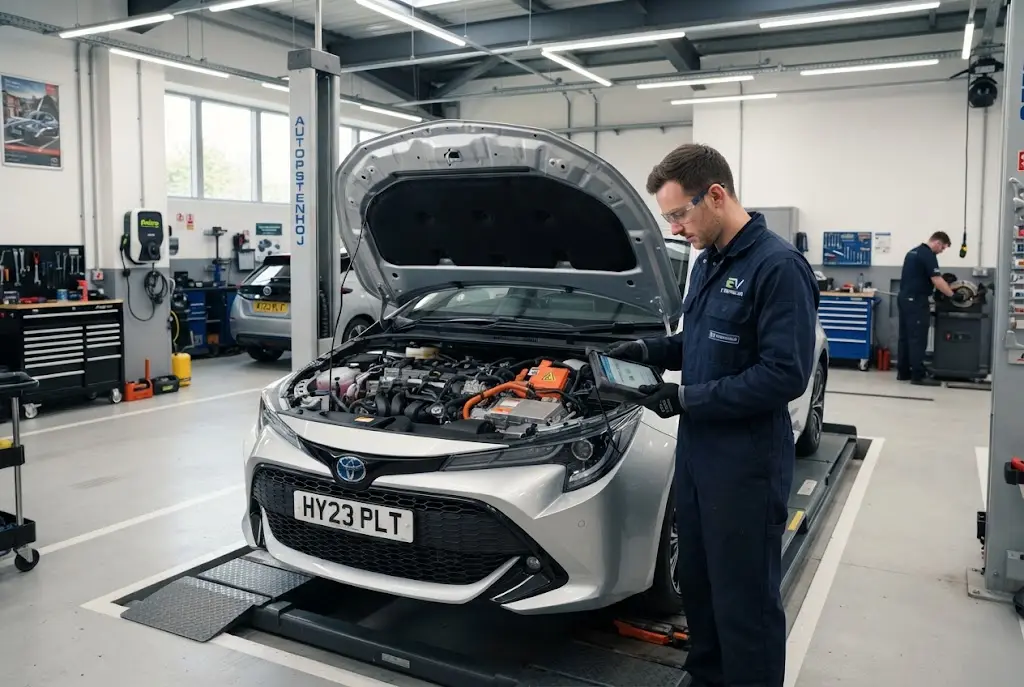
Understanding the difference between an MOT and service is an important part of responsible vehicle ownership in the UK. Both can involve checking a vehicle, but they serve different purposes. An MOT is a statutory test designed to check whether a vehicle meets specified road safety and environmental standards, while servicing is routine maintenance intended to keep the vehicle operating properly.
For motorists, knowing how these two activities work together can make it easier to manage vehicle compliance, maintenance and long-term ownership costs. It can also help drivers understand why passing an MOT does not necessarily mean that a vehicle is in perfect mechanical condition.
What Is an MOT and Service?
An MOT is a legally required test for most vehicles once they reach the applicable testing age. GOV.UK states that the MOT checks whether a vehicle meets road safety and environmental standards. For most cars, the first MOT is required by the third anniversary of registration, followed by annual testing. There are exceptions for certain vehicle types and separate arrangements apply in Northern Ireland.
A service is different. It is a programme of maintenance carried out according to the vehicle manufacturer’s recommendations or the vehicle’s condition and usage. Depending on the service schedule, it may include changing engine oil and filters, inspecting components and checking systems that are not comprehensively assessed during an MOT.
Consequently, an MOT should not be viewed as a substitute for servicing. The two activities address different aspects of vehicle ownership.
Why MOT Testing Matters on British Roads
The MOT system exists partly to help maintain minimum standards for vehicles using public roads. The Driver and Vehicle Standards Agency (DVSA) explains that the statutory MOT test is intended to check relevant vehicles at least annually for compliance with roadworthiness and environmental standards.
The system also creates an official record of the test. Every MOT produces an electronic record, and the result becomes part of the vehicle’s MOT history. This provides drivers with a useful record of previous tests and helps establish whether a vehicle has been tested as required.
Road safety is not solely the responsibility of testing centres or government agencies, however. Vehicle owners and drivers also have an ongoing responsibility to make sure their vehicles remain safe and roadworthy between tests.
MOT Testing Standards and the DVSA
The DVSA administers the MOT service on behalf of the Secretary of State. Its responsibilities include documenting test methods and standards, setting requirements for testing facilities and equipment, authorising eligible testing providers, maintaining MOT records and monitoring testing performance.
MOT testers must also meet specific requirements. They are approved by the DVSA to carry out tests and must follow the relevant testing standards. The agency requires continuing training and assessment for MOT testers, helping maintain consistency in the testing system.
This framework matters because an MOT is a regulated statutory test rather than a general inspection chosen by a driver or garage. Testing stations and testers operate within defined requirements rather than deciding independently what constitutes a pass or fail.
What Does an MOT Check?
The precise items inspected depend on the type of vehicle and the applicable MOT class. For cars and passenger vehicles, the inspection includes areas such as the interior, exterior, under-bonnet components, components underneath the vehicle, emissions and brakes.
The test focuses on items covered by the statutory requirements. It does not constitute a complete mechanical examination of every component. GOV.UK specifically notes that an MOT does not cover the condition of the engine, clutch or gearbox.
This distinction is important. A vehicle can pass its MOT while still requiring routine maintenance or attention to components that are outside the scope of the statutory test.
MOT and Service: Understanding the Difference
The simplest way to understand the difference is to consider the purpose of each activity.
- MOT: A statutory test assessing specified safety and environmental requirements.
- Service: Routine maintenance intended to maintain the vehicle and address manufacturer-specified servicing requirements.
- Repair: Work carried out to correct a known fault, defect or damaged component.
- Inspection: A broader examination that may be carried out for a particular purpose, such as checking a vehicle before purchase.
These activities can overlap in practical terms because a garage may identify problems during an MOT that require repair. However, the purposes remain different.
For drivers looking at wider car service costs in the UK, separating routine servicing from MOT expenses can also make annual vehicle budgets easier to understand.
When Should a Vehicle Have an MOT?
For most cars, the first MOT is due by the third anniversary of registration. After that, the MOT normally needs to be renewed annually. GOV.UK advises motorists to check their MOT history to confirm the expiry date.
An MOT can generally be carried out up to a month minus one day before the current certificate expires while retaining the existing renewal date. Booking early can therefore give drivers more flexibility while avoiding an unnecessary change to the annual testing cycle.
Drivers should not simply assume that a vehicle is covered because an MOT was completed during the previous year. Checking the actual expiry date is a straightforward way to avoid accidentally driving without a valid MOT.
What Happens If an MOT Expires?
Drivers should take an expired MOT seriously. GOV.UK states that a vehicle generally cannot be driven or parked on a road once its MOT has expired. Limited exceptions include travelling to a pre-arranged MOT test or to a place of repair in the circumstances allowed by the rules.
There can also be financial and legal consequences for driving without a valid MOT. GOV.UK states that drivers can be fined up to £1,000 for driving a vehicle without a valid MOT.
However, having a current MOT does not remove the driver’s responsibility for roadworthiness. A vehicle must remain safe to use between tests, regardless of the date shown on its MOT record.
What Happens If a Vehicle Fails?
An MOT result can identify different categories of problems. GOV.UK explains that a vehicle fails when the test identifies dangerous or major defects. Minor or advisory issues may also be recorded.
An advisory is particularly useful because it can alert a driver to a condition that may require attention even though the vehicle has passed the test. Addressing developing problems early can help prevent them from becoming more serious.
If a vehicle fails because of a dangerous defect, the rules governing whether it can be driven away become particularly important. Drivers should follow the relevant MOT result and repair requirements rather than assuming that an existing certificate automatically makes the vehicle safe to drive.
Why Servicing Still Matters After an MOT
Passing an MOT is not the same as completing a service. Because the MOT has a defined scope, it cannot provide a complete assessment of every mechanical system.
Routine servicing can address maintenance requirements that fall outside the statutory MOT inspection. Depending on the vehicle, this can include engine oil and filter replacement, checking fluid levels, inspecting belts and other components, and carrying out manufacturer-specified maintenance.
This is one reason drivers should avoid using the MOT date as their only maintenance reminder. A vehicle may require servicing before its next MOT is due.
Road Safety Is a Year-Round Responsibility
British road safety depends on more than annual testing. Tyres can lose pressure, lights can fail, brakes can wear and warning lights can appear at any point during the year.
Drivers should therefore pay attention to changes in how their vehicle behaves. Unusual noises, vibrations, warning lights, changes in braking performance or steering problems should not simply be ignored because the vehicle recently passed an MOT.
Regular checks can also help motorists identify simple problems before they become more serious. Tyre condition, fluid levels, lights and windscreen visibility are examples of areas that drivers can monitor as part of normal vehicle care.
MOT and Service Records
Keeping accurate vehicle records can make maintenance easier to manage. The official MOT history provides information about previous tests, while service invoices and maintenance records can provide additional information about work carried out between tests.
A well-organised record can also be useful when selling a vehicle. Potential buyers may want evidence that the vehicle has been maintained rather than simply tested when legally required.
Drivers who want to understand broader vehicle checks can also explore auto inspection services, particularly when a vehicle needs an inspection beyond the scope of a standard MOT.
Choosing an MOT Testing Centre
MOT tests must be carried out at authorised testing facilities for the relevant vehicle class. The DVSA oversees the authorisation and monitoring framework, and approved testers must work according to the applicable testing standards.
When choosing a testing centre, motorists can check whether it is authorised for their vehicle type and consider practical factors such as location, appointment availability and customer service.
If an MOT centre identifies additional repair work, drivers should ask for a clear explanation of the defect and determine whether the work is required immediately or relates to an advisory item that can be monitored.
How MOT, Servicing and Repairs Work Together
For responsible vehicle ownership, MOT testing, servicing and repairs should be viewed as connected but separate parts of vehicle care.
The MOT provides a regulated assessment against defined legal standards. Servicing provides scheduled maintenance. Repairs address faults or worn components. Together, these activities can help drivers maintain their vehicles and reduce the likelihood of avoidable problems.
This approach also supports better planning. Instead of waiting for an MOT failure to reveal a problem, motorists can follow the service schedule, monitor the vehicle throughout the year and respond promptly when warning signs appear.
Building Better Motoring Habits in the UK
The UK MOT system provides an important framework for vehicle compliance, but an annual test should not be considered the complete definition of responsible motoring. Drivers remain responsible for the condition of their vehicles throughout the year.
Understanding the distinction between an MOT and service helps motorists make better maintenance decisions. The MOT checks specified safety and environmental requirements, while servicing supports the vehicle’s ongoing mechanical maintenance.
For drivers, the practical lesson is straightforward: keep track of the MOT expiry date, follow the manufacturer’s servicing schedule, respond to warning signs and address defects promptly. These habits support both vehicle compliance and everyday road safety.
As vehicle technology continues to change, maintenance requirements are also evolving. The UK’s motoring landscape increasingly includes hybrid and electric vehicles, creating new servicing considerations for owners and garages. Understanding these changes alongside traditional MOT requirements will become an increasingly important part of modern UK vehicle ownership.