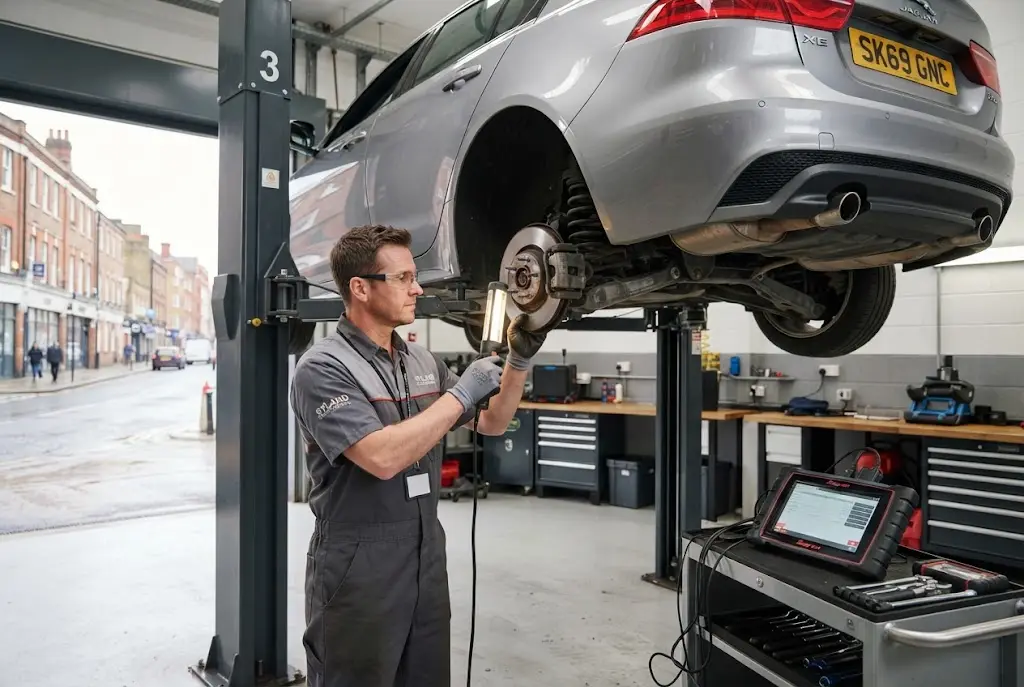
As more drivers move towards electrified vehicles, hybrid services are becoming an increasingly important part of the UK automotive industry. Hybrid cars combine a conventional combustion engine with electric propulsion, while fully electric vehicles rely on electric motors and high-voltage battery systems. Both require maintenance, but the type of work involved can differ significantly from traditional petrol and diesel servicing.
The UK’s transition towards cleaner transport is also changing what motorists expect from garages. Mechanics increasingly need knowledge of high-voltage systems, battery technology, regenerative braking and vehicle-specific diagnostic equipment. For owners, choosing a garage with appropriate training and equipment is an important part of maintaining an electrified vehicle.
What Are Hybrid Services?
Hybrid services cover maintenance, inspections and repairs for vehicles that combine electric and conventional power systems. A typical hybrid may contain a petrol engine, electric motor, high-voltage battery, power electronics and regenerative braking system alongside many components found in conventional cars.
This means a hybrid service needs to consider both sides of the vehicle. Routine maintenance can still involve engine oil, filters, tyres, brakes, suspension and other familiar components. However, technicians may also need to assess electrical systems and high-voltage components using appropriate procedures and equipment.
The precise requirements depend on the vehicle manufacturer, model and service schedule. Drivers should therefore follow the maintenance recommendations in their vehicle documentation rather than assuming that every hybrid requires the same checks.
Why Hybrid Services Are Becoming More Important
The UK’s vehicle market is undergoing a significant transition. In August 2026, the Department for Transport said more than one in four new cars sold were electric and that more than two million electric vehicles were registered on UK roads. The government is also reviewing the country’s zero-emission vehicle policy as the transition continues.
This changing vehicle mix has consequences for the automotive repair industry. Garages that traditionally focused on petrol and diesel vehicles increasingly need the skills, safety procedures and diagnostic technology required for electrified vehicles.
The transition is not limited to fully electric cars. Hybrid vehicles remain an important part of the market because they combine conventional and electric propulsion. As a result, motorists may increasingly encounter garages offering specialist hybrid maintenance alongside traditional MOT and service work.
How Hybrid Servicing Differs From Traditional Servicing
Hybrid vehicles share many maintenance requirements with conventional cars, but their additional electrical systems create important differences.
High-Voltage Components
Hybrid and electric vehicles can contain high-voltage electrical systems that require appropriate safety procedures. Technicians working on these systems need suitable training and equipment.
High-voltage components should not be treated like ordinary 12-volt vehicle electronics. A garage should understand the relevant manufacturer’s procedures before carrying out work involving high-voltage components.
Regenerative Braking
Many hybrid vehicles use regenerative braking to recover energy during deceleration. Instead of relying exclusively on conventional friction brakes, the vehicle can use the electric motor to help slow the car and recover energy.
This affects the way braking systems operate and means technicians need to understand both the mechanical and electrical aspects of the vehicle’s braking system.
Battery Systems
The traction battery is one of the defining components of an electrified vehicle. Hybrid services may include visual checks of high-voltage components, diagnostic checks or other battery-related assessments depending on the vehicle and service provider.
Not every standard garage will have the equipment or training required to conduct every type of battery health assessment. Drivers should therefore ask what battery checks are actually included before booking a service.
Hybrid Services and EV Servicing
Hybrid and fully electric vehicles should not automatically be treated as identical. A hybrid contains a conventional powertrain alongside its electric system, whereas a battery electric vehicle does not use a conventional combustion engine for propulsion.
As a result, hybrid services can include maintenance tasks that are not relevant to a pure battery electric vehicle, such as engine oil and combustion-engine components.
Fully electric vehicles generally have fewer traditional drivetrain components. However, they still require inspections and maintenance. Tyres, brakes, suspension, steering, cabin filters, wipers, cooling systems and other equipment can still require attention.
RAC’s EV maintenance guidance notes that electric vehicles can require servicing less frequently than some petrol or diesel vehicles, although service intervals vary by manufacturer and model. Owners should therefore follow the schedule specified for their particular vehicle.
Choosing EV Mechanics in the UK
Finding the right technician is particularly important when work involves high-voltage systems. Not every garage is equipped to carry out every type of hybrid or EV repair.
Before booking, motorists should ask whether the garage:
- Has technicians trained to work on hybrid or electric vehicles
- Has appropriate high-voltage safety equipment
- Can perform diagnostics on the vehicle’s electrical systems
- Can service the specific make and model
- Can carry out battery-related inspections when required
- Uses the appropriate manufacturer service information
RAC similarly advises hybrid owners to use garages with mechanics trained to work on hybrid systems and the appropriate equipment. It also distinguishes between general diagnostic checks and dedicated battery health or efficiency testing.
What Can a Hybrid Service Include?
The exact contents of a hybrid service vary by provider and vehicle. A comprehensive service may combine conventional maintenance with checks specific to the hybrid system.
Depending on the vehicle and service level, this can include:
- Engine oil and filter checks or replacement
- Battery and charging-system checks
- Visual inspection of high-voltage components
- Cooling-system checks
- Brake and regenerative braking system checks
- Tyre and wheel inspections
- Steering and suspension checks
- Lighting and safety equipment checks
- Diagnostic checks
- Inspection of relevant electrical control systems
These should be viewed as examples rather than a universal checklist. A driver should confirm the exact work included in a service quotation.
Hybrid Services and Battery Maintenance
Battery condition is one of the areas that can create uncertainty for hybrid owners. A high-voltage battery is different from the conventional 12-volt battery used for starting and operating many vehicle accessories.
A warning light or change in vehicle performance can indicate that further investigation is needed, but it does not automatically establish that the traction battery itself has failed. Diagnostic testing can help technicians determine which system requires attention.
Some service providers offer dedicated battery health or efficiency testing, while others may only perform general diagnostic checks. This distinction is worth confirming before booking if battery condition is the main reason for an inspection.
Does an Electric Vehicle Need Servicing?
Yes. Moving to an electric vehicle does not eliminate vehicle maintenance. It changes the type and frequency of some maintenance tasks.
Electric vehicles do not require conventional engine oil changes because they do not have an internal combustion engine. However, owners still need to maintain tyres, brakes, steering, suspension, lights, cooling systems, wipers and other components.
The vehicle’s manufacturer determines the appropriate service schedule. Some EVs have relatively long intervals between inspections, while others follow fixed annual or mileage-based schedules.
Regular servicing can also help identify problems before they become more disruptive. Drivers should therefore avoid assuming that fewer traditional engine components means that servicing is unnecessary.
Charging Infrastructure and Vehicle Maintenance
The growth of electric motoring is also connected to the expansion of charging infrastructure. Home chargers, workplace charging and public charging networks are becoming increasingly relevant to how drivers use electric and plug-in hybrid vehicles.
However, charging equipment and vehicle servicing are separate areas. A garage may be able to service a hybrid or EV without installing charging equipment, while an electrical contractor specialising in charge points may not provide mechanical vehicle maintenance.
Drivers should therefore choose qualified providers for each type of work and avoid assuming that expertise in one area automatically means expertise in another.
The Future of UK Motoring and Hybrid Maintenance
The UK’s automotive landscape is continuing to evolve. In August 2026, the Department for Transport launched a review of the Zero Emission Vehicle Mandate, with the consultation considering the pathway towards the government’s stated objectives for new zero-emission vehicle sales and the phase-out of new petrol and diesel cars.
These policy developments do not change the maintenance requirements of an individual vehicle, but they illustrate why technical skills in electrified vehicle servicing are becoming increasingly relevant to the automotive sector.
The transition also creates opportunities for garages to invest in technician training, diagnostic equipment and high-voltage safety systems. For consumers, it makes it increasingly important to understand what type of workshop is appropriate for their vehicle.
Are Hybrid Services More Expensive?
The cost of hybrid servicing depends on the vehicle, service level, garage, location and work required. A hybrid can still require many conventional maintenance tasks, while specialist electrical diagnostics or battery-related work may require additional expertise and equipment.
However, it is not accurate to assume that every hybrid service will automatically cost more than a conventional service. The actual price depends on what the manufacturer specifies and what work the vehicle needs.
When comparing quotes, drivers should check whether the price includes diagnostics, battery-related checks, replacement parts and VAT. A clear like-for-like comparison is more useful than comparing headline prices alone.
Hybrid Ownership and Long-Term Maintenance
Hybrid ownership combines some familiar aspects of conventional motoring with new maintenance considerations. Owners should keep service records, follow manufacturer recommendations and pay attention to warning lights or changes in vehicle performance.
It is also sensible to understand which components are covered by the vehicle’s warranty and what conditions apply. Battery warranties and general vehicle warranties can have different terms, so owners should consult their specific documentation.
For drivers comparing the overall cost of keeping a vehicle on the road, routine servicing should be considered alongside tyres, insurance, repairs and other car service costs.
Preparing for the Next Era of UK Vehicle Servicing
The growth of hybrid and electric vehicles is changing the skills required across the UK automotive service industry. Traditional mechanical knowledge remains valuable, but technicians increasingly need expertise in electrical systems, diagnostics and high-voltage safety.
For motorists, the practical lesson is simple: choose a garage that is appropriately equipped and trained for the vehicle being serviced. Ask what checks are included, follow the manufacturer’s service schedule and seek professional advice when warning lights or unusual performance appear.
Hybrid services are therefore not simply an extension of conventional car maintenance. They represent the developing overlap between mechanical engineering, electrical systems and digital vehicle diagnostics.
As the UK’s vehicle fleet continues to evolve, understanding these differences will help drivers make more informed maintenance decisions and help garages adapt to the changing requirements of modern UK motoring.