Wheel alignment is an important part of vehicle maintenance that can easily be overlooked. When a car’s wheels are correctly aligned, the vehicle should track properly, steering should feel predictable and tyres can wear more evenly. When alignment is disturbed, drivers may notice pulling, uneven tyre wear or changes in steering behaviour.
British roads expose vehicles to plenty of situations that can affect wheel geometry, including potholes, kerbs, uneven surfaces and everyday wear to suspension components. A relatively minor impact can sometimes alter alignment, particularly if a wheel or suspension component has been damaged.
Understanding wheel alignment, wheel tracking and the difference between alignment and balancing can help motorists recognise potential problems before they develop into more expensive maintenance issues.
What Is Wheel Alignment?
Wheel alignment refers to the adjustment of the angles of a vehicle’s wheels so they sit and point according to the manufacturer’s specified geometry. The precise settings vary between vehicles and can involve several measurements relating to how the wheels interact with the road and each other.
Correct alignment helps the vehicle maintain predictable handling. It can also help the tyres make proper contact with the road and reduce unnecessary or uneven wear.
Alignment is not simply about making all four wheels appear visually straight. Modern vehicles can require precise measurements and adjustments, which is why alignment work is normally carried out using specialist workshop equipment.
Why Wheel Alignment Matters on British Roads
Road conditions can have a significant effect on a vehicle’s wheels and suspension. Hitting a pothole or kerb can create an impact that affects steering or suspension components, even when there is no obvious external damage.
The Highway Code guidance on vehicle maintenance specifically warns that excessive or uneven tyre wear can be caused by faults in braking or suspension systems or by wheels being out of alignment. It advises motorists to have such faults corrected as soon as possible. :contentReference[oaicite:0]{index=0}
This makes alignment more than a comfort issue. If a vehicle does not behave as expected, drivers should investigate the cause rather than assuming unusual handling is simply part of normal driving.
Common Signs of Poor Wheel Alignment
Misalignment does not always produce an obvious warning. However, several symptoms can indicate that a vehicle should be inspected.
- The car pulls noticeably to one side on a reasonably level road.
- The steering wheel does not sit straight when travelling straight.
- Tyres show uneven or accelerated wear.
- The vehicle feels less stable or predictable through corners.
- The steering feels unusual after hitting a pothole or kerb.
- New tyres begin showing an unusual wear pattern.
None of these signs proves that alignment is the cause. Tyre pressure, suspension faults, worn steering components and braking problems can produce similar symptoms. A professional inspection can identify the underlying issue.
Wheel Alignment and Tyre Wear
One of the most noticeable consequences of incorrect alignment can be uneven tyre wear. Instead of wearing consistently across the tread, a tyre may develop a pattern that suggests the wheel is not sitting correctly.
Uneven wear matters because tyres are a vehicle’s main contact with the road. A driver may replace a tyre because of excessive wear without addressing the underlying alignment problem, only for the replacement tyre to develop a similar pattern.
For this reason, alignment checks can be particularly useful when unusual wear is discovered. The aim should be to identify why the tyre has worn unevenly rather than simply fitting another tyre.
UK government guidance also states that drivers are responsible for keeping their vehicles roadworthy and highlights tyre condition and tread as items motorists should check. :contentReference[oaicite:1]{index=1}
Wheel Tracking vs Wheel Alignment
The terms wheel tracking and wheel alignment are often used interchangeably in everyday automotive conversations, although workshop services can differ in scope.
Tracking commonly refers to checking and adjusting the alignment of the wheels, particularly the relationship between the front wheels. A full alignment service can involve a broader set of measurements and may assess the geometry of multiple wheels and suspension angles, depending on the vehicle and equipment.
Because terminology can vary between garages, motorists should ask exactly what an advertised alignment or tracking service includes. This is especially important when a vehicle has experienced an impact or shows unusual tyre wear.
Wheel Balancing Is Not the Same as Alignment
Wheel balancing is another service that is sometimes confused with alignment. The two address different issues.
Balancing concerns the distribution of weight around a wheel and tyre assembly. If a wheel and tyre are not properly balanced, the driver may experience vibration, particularly at certain speeds.
Alignment, by contrast, concerns wheel geometry and how the wheels are positioned relative to the vehicle and road.
A vehicle can therefore have correctly balanced wheels but poor alignment, or it can have correct alignment while a wheel and tyre assembly requires balancing.
Why Steering Alignment Affects Driving Feel
Steering alignment influences how a vehicle responds to steering inputs. When the geometry is correct, the car should generally feel stable and predictable during ordinary driving.
If alignment is significantly disturbed, a driver may need to make more steering corrections to maintain a straight path. The vehicle can also feel different when cornering or braking.
Drivers should not attempt to compensate for a persistent steering problem by simply holding the wheel differently. If a vehicle consistently pulls to one side or the steering wheel has changed position, it is better to have the vehicle inspected.
Can Potholes Affect Wheel Alignment?
Potholes are one of the common reasons motorists become concerned about alignment. A significant impact can affect a tyre, wheel, suspension component or steering component.
Not every pothole strike will cause misalignment. However, drivers should pay attention to changes that occur immediately afterwards. A new vibration, pulling sensation, steering change or visible tyre damage warrants further investigation.
A damaged wheel or suspension component can also create symptoms that resemble an alignment problem. For that reason, an alignment measurement should not be treated as a substitute for a complete inspection when a vehicle has suffered a substantial impact.
Wheel Alignment and Vehicle Stability
Vehicle stability depends on several systems working together, including tyres, steering, suspension and braking. Wheel alignment is one part of that larger system.
A vehicle that tracks predictably is easier for the driver to control. Correct wheel geometry can also support consistent tyre contact with the road.
Government MOT guidance separately covers steering, wheels, tyres and suspension because each area contributes to the vehicle’s condition and safe operation. The current MOT inspection manual includes specific checks covering steering components, wheel and tyre condition, suspension and related systems. :contentReference[oaicite:2]{index=2}
That does not mean an MOT is an alignment service. Instead, it highlights why motorists should treat steering, tyres and suspension as connected aspects of vehicle maintenance.
When Should You Have the Alignment Checked?
There is not one universal interval that requires every car to receive a wheel alignment service. Instead, an inspection is often most useful when there is a reason to suspect that the geometry has changed.
Consider an alignment check after:
- A significant pothole or kerb impact.
- Replacing suspension or steering components.
- Replacing tyres when unusual wear has been identified.
- Noticing persistent pulling to one side.
- Seeing uneven tyre wear.
- Experiencing a change in steering-wheel position.
Some motorists also choose periodic alignment checks as preventative maintenance, particularly when they regularly drive on poor road surfaces or want to monitor tyre wear closely.
Does a New Set of Tyres Need Alignment?
Fitting new tyres does not automatically mean that alignment is required. However, a tyre replacement appointment can be a useful opportunity to inspect the existing wear pattern.
If the old tyres show significant uneven wear, simply installing new ones may not solve the underlying problem. An alignment check can help determine whether wheel geometry is contributing to the wear.
It is also sensible to check tyre pressures according to the manufacturer’s recommendations. Incorrect pressure can affect handling and tyre wear independently of alignment.
Choosing a Garage for Wheel Alignment
When looking for a workshop, motorists should consider whether it has appropriate alignment equipment and technicians who understand the vehicle being serviced.
Ask what type of alignment check will be carried out and whether the garage will provide measurement results before and after adjustment. A reputable workshop should also be prepared to explain whether any additional steering or suspension faults have been identified.
Drivers should be cautious if an alignment service is recommended without investigating obvious mechanical problems. If a steering or suspension component is worn or damaged, correcting wheel angles alone may not address the underlying issue.
For a broader comparison of independent garages, regional businesses and national workshops, see our guide to automotive service companies.
Wheel Alignment on Electric and Hybrid Vehicles
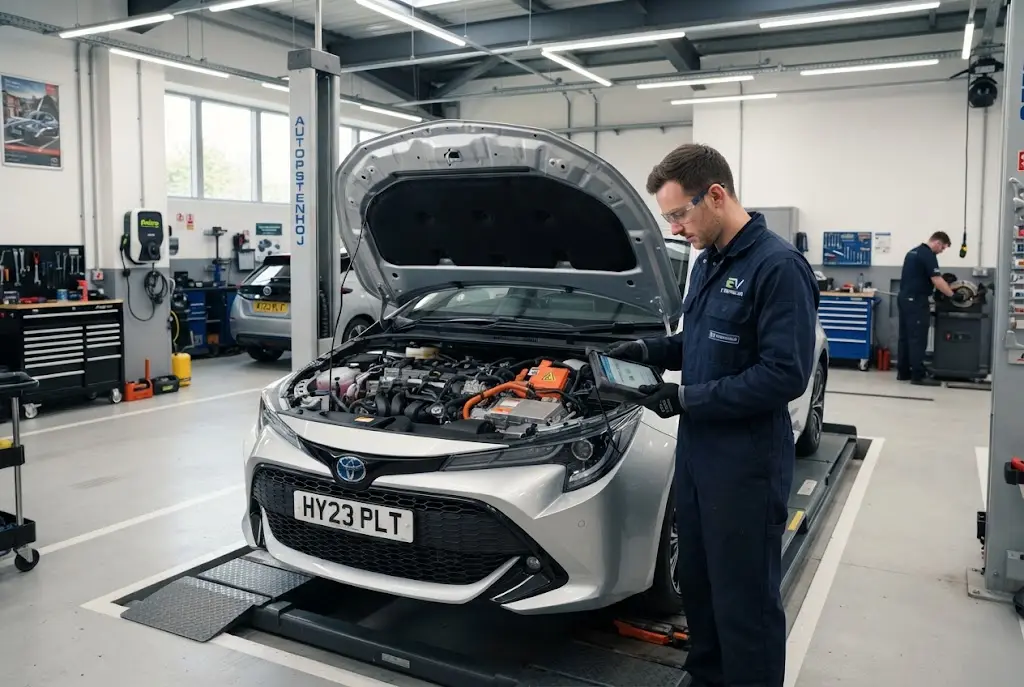
Wheel alignment is relevant to electric and hybrid vehicles as well as conventional petrol and diesel cars. Electrified vehicles still rely on tyres, steering and suspension systems, so their wheel geometry remains important.
In some electric vehicles, the additional mass associated with the battery system can also make tyre condition and suspension maintenance particularly important. This does not mean every EV requires a different alignment procedure, but technicians should use the correct specifications for the particular model.
Drivers looking for more information about maintaining electric vehicles can read our guide to EV servicing, while hybrid owners can explore hybrid servicing for related maintenance considerations.
What Happens During an Alignment Check?
A modern workshop generally places the vehicle on specialist alignment equipment and measures the relevant wheel angles against the manufacturer’s specifications or appropriate technical data.
If the measurements show that adjustments are possible and necessary, the technician can make the appropriate changes. The exact adjustment process varies depending on the vehicle’s suspension and steering design.
Importantly, not every alignment issue can be corrected simply by adjusting settings. If components are bent, damaged or excessively worn, further repairs may be required first.
Alignment, Road Safety and Regular Vehicle Checks
Road safety depends on regular attention to the condition of a vehicle. Wheel alignment is only one part of this responsibility, but it can influence steering behaviour and tyre wear.
Drivers should regularly inspect tyres for cuts, damage and adequate tread, while also paying attention to changes in steering and handling. GOV.UK states that car tyres must meet the required tread-depth rules and be free from relevant defects. :contentReference[oaicite:3]{index=3}
It is also important not to confuse an MOT pass with a guarantee that alignment is perfect. An MOT checks specific components and conditions according to the applicable inspection requirements. Routine maintenance remains the driver’s responsibility.
Why Alignment Should Not Be Ignored
Ignoring an alignment problem can lead to unnecessary tyre wear and may affect how a vehicle feels on the road. If the underlying cause is a damaged steering or suspension component, delaying inspection could also allow a more significant mechanical issue to remain unresolved.
That does not mean every slightly off-centre steering wheel indicates a dangerous problem. Vehicles can have different steering characteristics, and symptoms can have multiple causes. The sensible approach is to investigate persistent or sudden changes rather than making assumptions.
Final Thoughts on Wheel Alignment
Wheel alignment is an important part of maintaining predictable handling, consistent tyre wear and good vehicle condition. Potholes, kerb impacts, suspension work and component wear can all create situations where an alignment check becomes worthwhile.
Drivers should understand the difference between alignment, tracking and wheel balancing, as these services address different aspects of vehicle performance. When symptoms such as uneven tyre wear, pulling or changed steering behaviour appear, a professional inspection can help identify the underlying cause.
For British motorists, regular tyre and vehicle checks are an essential part of responsible ownership. Maintaining correct wheel geometry alongside healthy tyres, steering and suspension can help support safe and comfortable driving throughout the vehicle’s life.