British motoring is more than a history of cars. It is also a story about changing lifestyles, technology, industry, roads, towns and everyday life. Over more than a century, the motor vehicle developed from a relatively exclusive form of transport into an important part of daily life for millions of people. Along the way, garages, petrol stations, showrooms, motorways and suburban roads became familiar features of the British landscape.
The history of motoring also helps explain why vehicle ownership and maintenance remain such important parts of modern life. From early motor houses and repair workshops to today’s specialist garages serving hybrid and electric vehicles, the supporting infrastructure has continually adapted to changing technology and consumer habits.
The Early Years of British Motoring
The first petrol-powered motor cars were imported into England from continental Europe in 1895. At the time, cars were expensive and remained largely associated with wealthy owners. Early motorists often used their vehicles for touring and leisure rather than the everyday journeys that became normal in later decades.
The legal environment also had to change. Historic England records that the 1896 Locomotives on Highways Act removed the restrictions associated with the earlier “Red Flag Act” and raised the speed limit to 12 mph. This helped make motor vehicles a more realistic form of transport on British roads.
As car numbers increased, Britain gradually developed the infrastructure needed to support them. Purpose-built garages, showrooms, repair facilities and filling stations appeared alongside existing roads. These buildings are now important reminders of how the motor car changed the physical environment.
British Motoring and the Rise of Vehicle Ownership
During the early decades of the twentieth century, vehicle ownership expanded beyond a small wealthy minority. By the end of the First World War, motor vehicles had largely displaced horse-drawn transport on Britain’s roads for many forms of travel and commercial activity.
The inter-war period brought further changes. Middle-class households increasingly viewed cars as practical tools for mobility rather than simply luxury possessions. Garages and showrooms became more established, while filling stations and roadside businesses developed to serve motorists.
Historic England describes how motor-related buildings became an increasingly visible part of the British landscape. Domestic garages, car parks, petrol stations, showrooms, workshops, roadhouses and other facilities all emerged in response to growing motor use.
British Motoring in the 1930s and 1940s
The 1930s were an important period for British road development and automotive culture. Cars influenced the design of suburbs, arterial roads and commercial areas. Roadside businesses developed new ways of serving motorists, while motoring became increasingly connected with leisure and longer-distance travel.
However, the Second World War and its aftermath created a very different environment. Restrictions, shortages and economic pressures affected vehicle use and the availability of fuel and materials. Private motoring could not simply continue along the same path as before the war.
The post-war period initially remained shaped by austerity. Nevertheless, the foundations of mass motoring were already developing, and rising prosperity would eventually make car ownership accessible to a much larger proportion of households.
How the 1950s Changed British Motoring
The 1950s marked a significant transition. As post-war conditions improved, car ownership began to grow, and Britain’s road infrastructure started adapting to increasing traffic.
The first motorway, the Preston bypass, opened in December 1958. The following year, a 75-mile section of the M1 opened. These developments represented a major change in long-distance travel, creating roads designed specifically for faster motor traffic.
The growth of motorways also created demand for new supporting infrastructure. Motorway service stations provided places for drivers and passengers to rest and refuel, becoming a distinctive part of Britain’s developing motorway culture.
The decade also saw the arrival of the Mini. The National Archives identifies the Mini, first built in 1959 by the British Motor Corporation, as an icon of the 1960s. Its compact design and relatively economical use of petrol helped it become particularly significant within the changing British car market.
British Motoring in the 1960s
The 1960s were arguably one of the most important periods in the expansion of mass vehicle ownership. Historic England notes that by the 1960s car ownership had become commonplace, while the National Archives describes a period in which millions of families bought cars as household prosperity increased.
The car became closely associated with personal independence and mobility. Families could travel further for leisure, shopping and holidays, while workers could increasingly use private vehicles for commuting.
The growth of motorways reinforced this change. Longer journeys became easier, and roadside facilities developed around the needs of motorists. The wider landscape changed as well, with new roads, petrol stations, garages and commercial developments appearing alongside established towns and emerging suburbs.
British motoring also became part of popular culture. Cars appeared in films, television, advertising and everyday social life. Certain models became closely associated with particular periods, helping create the classic-car culture that remains visible today.
Garage History and the Changing Motor Trade
Garages have always been an important part of British motoring. Early garages combined repair work with fuel sales, storage or showroom functions. Over time, specialist repair businesses, manufacturer dealerships and independent workshops developed different roles.
Historic England’s research into Britain’s motor-car infrastructure highlights the importance of maintenance and repair garages as a distinct building type. These businesses provided the practical support required as vehicle ownership expanded.
The garage also became a familiar social feature of many communities. Local mechanics often developed long-standing relationships with customers, while motorists relied on their knowledge to keep increasingly complex vehicles operating reliably.
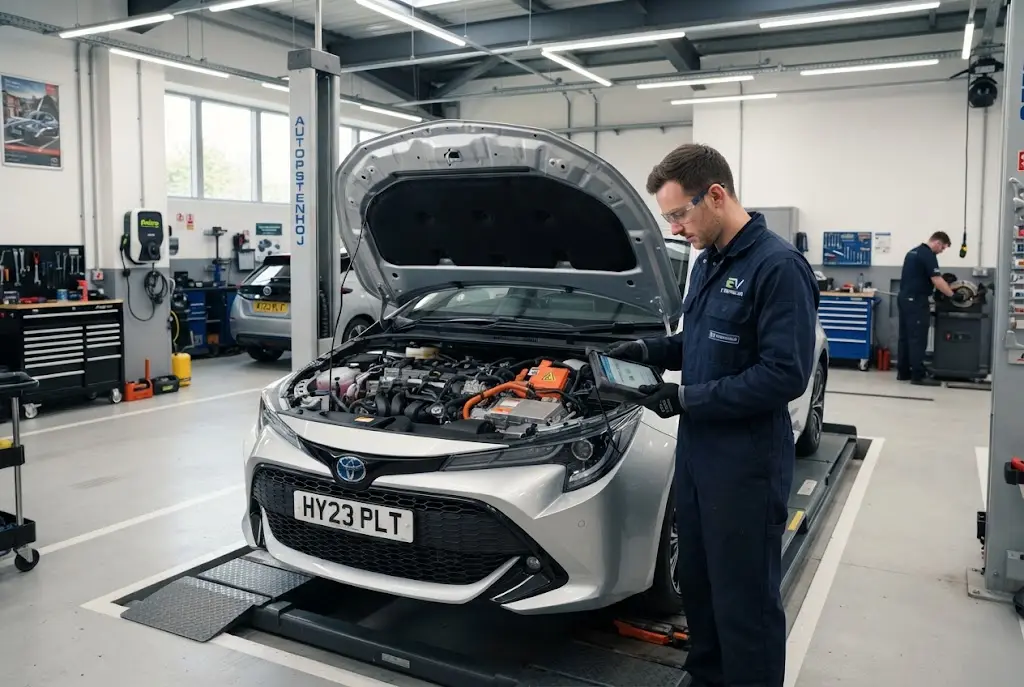
Today, the traditional garage is evolving again. Modern vehicles require computer diagnostics, electronic expertise and, increasingly, knowledge of high-voltage systems. This transition is explored further in our guide to hybrid services and EV maintenance.
British Motoring Through the 1970s and 1980s
The optimism surrounding mass car ownership was followed by a period of significant industrial and economic change. Britain’s automotive manufacturing sector faced increasing international competition, while changes in the global economy affected production and employment.
Historic England’s research into Coventry illustrates the scale of these changes. Coventry had become closely associated with Britain’s automotive industry, but from the 1970s its car manufacturing sector experienced significant difficulties. By the early 1980s, major companies in the city had substantially reduced their workforces.
For motorists, however, private vehicle ownership remained deeply embedded in everyday life. The car continued to shape where people lived, worked and shopped. Out-of-town development and road-based travel became increasingly important features of the British landscape.
By this stage, vehicle ownership was no longer an unusual aspiration for many households. Historic England records that by 1980 many households owned more than one car, illustrating how dramatically motoring had expanded from its early twentieth-century origins.
Classic Motoring and Automotive Heritage
Classic cars provide a tangible connection with these earlier periods. Vehicles that were once ordinary family transport can become significant examples of automotive history as technology, styling and manufacturing methods change.
Classic motoring is therefore about more than collecting expensive vehicles. It can include preserving everyday cars, historic garages, period petrol stations and other elements of the infrastructure that supported motorists.
Historic England has documented surviving examples of early petrol stations, garages and motor-related buildings because they demonstrate how the motor vehicle transformed British communities. Some historic garages retain original architectural features that reveal how motoring was presented to customers in earlier decades.
This heritage also shows that cars influenced more than transportation. They affected architecture, town planning, employment, leisure and the appearance of streets and countryside.
How Cars Changed British Public Life
The expansion of motoring had consequences beyond vehicle ownership. As traffic increased, towns and cities had to reconsider how public space was organised.
Historic England notes that from the later 1960s, rising car use contributed to policies such as pedestrianisation and traffic calming. From the 1980s, the growth of out-of-town development also changed the relationship between traditional town centres and peripheral commercial areas.
Road infrastructure consequently became part of wider social planning. Motorways, bypasses, car parks, petrol stations and suburban roads all influenced where people travelled and how communities developed.
Historic England’s broader study of motoring heritage describes how cars encouraged people to travel further for sport, leisure, seaside trips and entertainment. The motor vehicle therefore helped change patterns of recreation as well as everyday transport.
Vehicle Ownership in Modern Britain
Modern British vehicle ownership looks very different from the early days of motoring, but the basic relationship between cars and everyday mobility remains significant.
Vehicles have become more sophisticated, with electronic systems, advanced safety technology, computerised diagnostics and electrified powertrains. At the same time, motorists face new considerations involving emissions, running costs and changing transport policies.
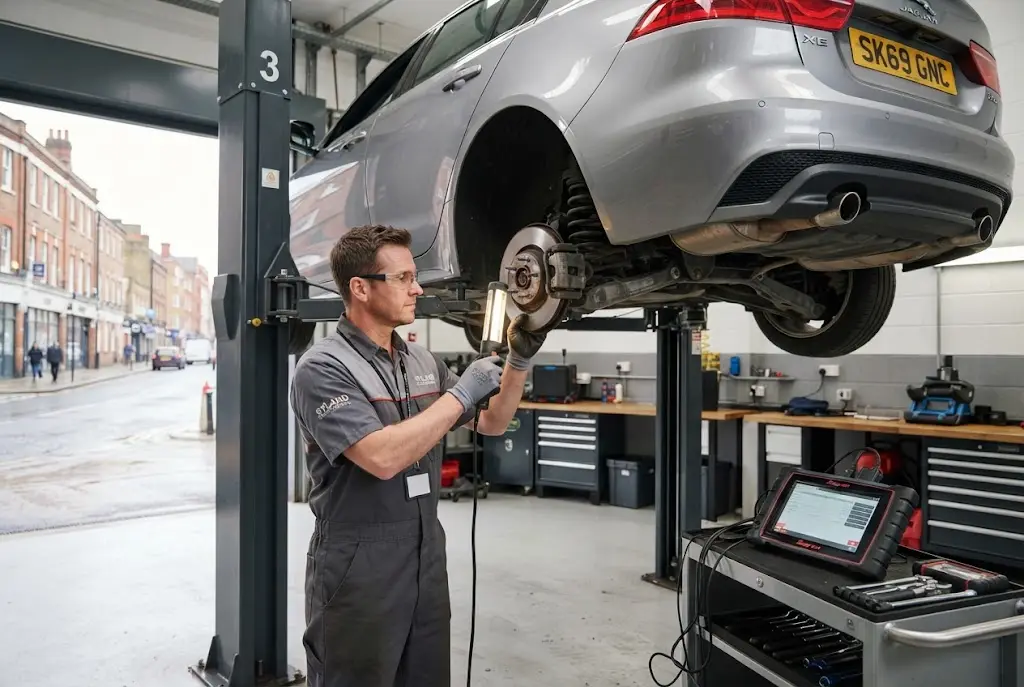
Routine maintenance remains important regardless of the vehicle’s age or powertrain. Understanding car service costs in the UK can help owners plan for routine maintenance, while an appropriate vehicle inspection can provide additional information when a vehicle’s condition needs closer examination.
From Petrol Stations to Modern Service Centres
The traditional petrol station was once one of the defining symbols of British motoring. Early filling stations were designed around the practical needs of motorists, sometimes incorporating shops, workshops or other facilities.
As the industry developed, large fuel companies became increasingly influential. Historic England’s records of surviving filling stations demonstrate how these sites evolved alongside changes in vehicle ownership and fuel distribution.
Today, the concept of the roadside service location is changing again. Electric vehicles require charging infrastructure rather than conventional refuelling alone, while modern garages increasingly need sophisticated diagnostic equipment.
The physical landscape of British motoring is therefore continuing to evolve just as it did during the arrival of motorways and mass vehicle ownership.
British Motoring and Changing Lifestyles
Every major stage in motoring history has reflected changes in British society. Early cars represented wealth and leisure. Later, vehicle ownership became associated with household mobility. Motorways expanded travel possibilities, while suburban development changed the relationship between homes, workplaces and town centres.
Cars also became closely linked to family life. A vehicle could make it easier to visit relatives, take holidays, commute to work or reach services outside walking distance.
At the same time, increasing car use created new challenges, including congestion, parking demand, road safety concerns and environmental pressures. Britain’s motoring story is therefore not simply a story of technological progress; it is also a record of how society adapted to the opportunities and consequences of widespread vehicle ownership.
The Next Chapter of British Motoring
The future of British motoring is likely to look different from the twentieth century model. Hybrid and electric vehicles are changing what drivers expect from their cars and what technicians need to know. Charging infrastructure is becoming part of the transport landscape, while traditional mechanical servicing is increasingly being combined with electrical and digital diagnostics.
Yet the historical pattern remains familiar. New technology creates new infrastructure, new businesses and new habits. Just as garages, filling stations and motorways emerged to support earlier generations of vehicles, modern workshops and charging networks are adapting to today’s vehicles.
Why British Motoring History Still Matters
British motoring provides a useful window into more than automotive technology. It reveals how transport has influenced architecture, industry, employment, leisure, family life and the development of towns and cities.
From the first petrol cars to the expansion of mass ownership, from local garages to motorways and from classic vehicles to modern electric cars, each period has left a physical and cultural mark.
Understanding that history also gives today’s motorists useful perspective. The vehicles on British roads may be changing rapidly, but the need for reliable maintenance, responsible ownership and suitable infrastructure remains constant.
For anyone interested in the continuing story of British motoring, today’s automotive service industry represents another chapter in that long history. The local garage is evolving, vehicle technology is changing and new forms of mobility are emerging, but the relationship between people, vehicles and Britain’s roads continues to shape everyday life.