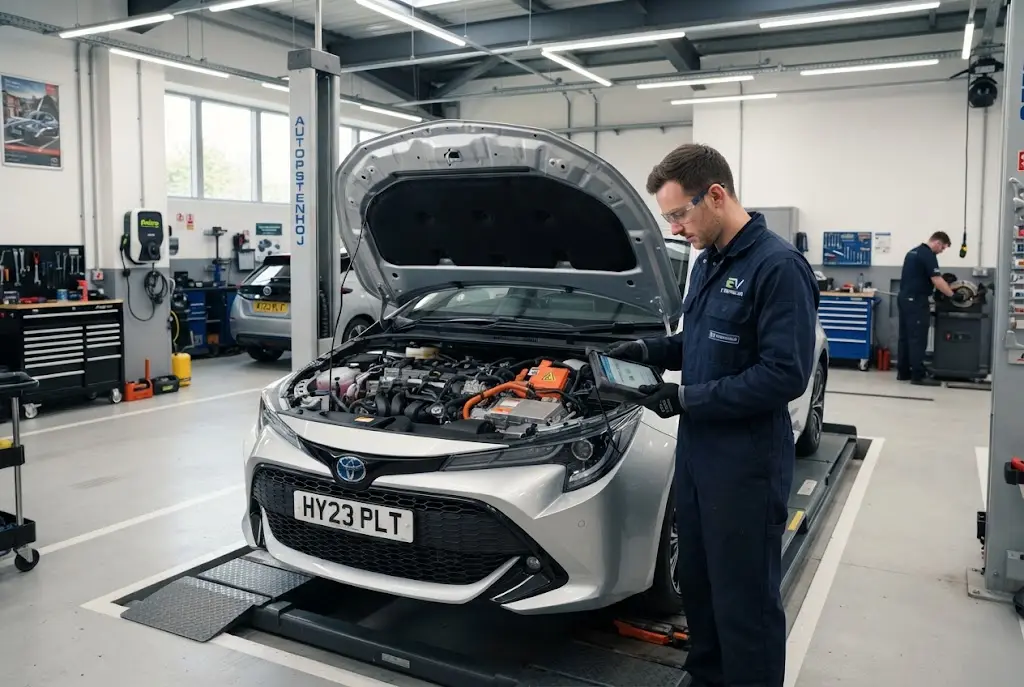
Hybrid servicing has become an increasingly important part of modern vehicle maintenance as more British motorists choose cars that combine an internal combustion engine with electric drive technology. Although hybrids share many components with conventional cars, their combination of petrol or diesel power, electric motors, battery systems and electronic controls creates some additional servicing considerations.
For drivers, owning a hybrid does not mean abandoning the familiar principles of regular maintenance. Tyres, brakes, fluids, suspension, lights and other conventional components still need attention. However, the hybrid system also requires appropriate checks and, depending on the vehicle, technicians with suitable training and equipment.
Understanding how hybrid services work can help owners maintain their cars properly, recognise when specialist expertise is appropriate and make more informed decisions when choosing a workshop.
What Does Hybrid Servicing Involve?
Hybrid servicing combines many of the checks found during conventional car maintenance with additional attention to the vehicle’s electrified systems. The exact requirements vary according to the make, model, age, mileage and type of hybrid.
A service may include routine inspections, engine-related maintenance, brake and tyre checks, fluid checks and diagnostic assessments. Depending on the vehicle manufacturer’s service schedule, technicians may also inspect components associated with the hybrid powertrain.
The important point is that there is no single universal hybrid service procedure. A Toyota hybrid, for example, may have different manufacturer recommendations from a plug-in hybrid produced by another manufacturer.
Owners should therefore follow the service schedule supplied for their particular vehicle rather than relying on a generic servicing interval.
Why Hybrid Servicing Matters for Modern Motoring
Hybrid vehicles are designed to manage two sources of propulsion. In a typical hybrid, the petrol engine works alongside an electric motor and battery system, with the vehicle’s control systems deciding how those components work together.
This arrangement can change how some parts of the vehicle are used. For example, regenerative braking can reduce the amount of work required from conventional friction brakes in some driving situations. Toyota notes that its hybrid vehicles can experience lower brake-pad wear as a result of their hybrid braking system. :contentReference[oaicite:0]{index=0}
However, lower wear on one component does not mean maintenance can be ignored. Brake components still need inspection, while tyres, suspension, steering and other safety-related systems remain essential to everyday roadworthiness.
Hybrid Services and Battery Maintenance
The hybrid battery is one of the components that most clearly separates an electrified vehicle from a conventional petrol or diesel car. It stores electrical energy that can be used by the vehicle’s electric drive system.
Drivers may naturally worry about battery condition and replacement costs. However, battery maintenance should not be reduced to simply asking how long a battery will last. The vehicle’s monitoring systems, manufacturer recommendations and servicing procedures all form part of the bigger picture.
Some manufacturers provide dedicated battery or hybrid health checks. Toyota, for example, states that its Hybrid Service includes checks of the hybrid system and hybrid battery. The company also says that qualifying annual checks can provide additional battery-related cover under its current programme, subject to its terms and conditions. :contentReference[oaicite:1]{index=1}
This demonstrates why owners should check the exact service programme for their vehicle rather than assuming that every hybrid receives identical battery treatment.
Toyota Hybrid Service: What Owners Should Know
Toyota hybrid service is a useful example of how a manufacturer can structure maintenance around electrified vehicles. Also Toyota says its hybrid vehicles should generally be serviced every 12 months or 10,000 miles, whichever comes first, although specific vehicle requirements can differ. :contentReference[oaicite:2]{index=2}
The manufacturer also describes a dedicated Hybrid Health Check covering the hybrid system and battery. For owners, this type of inspection can provide additional information beyond the routine maintenance carried out on the petrol engine and other conventional components.
Toyota’s current UK servicing information also highlights the role of trained technicians and manufacturer-specific maintenance procedures. :contentReference[oaicite:3]{index=3}
For Toyota owners, checking the current manufacturer’s servicing information is therefore a sensible starting point. It can clarify which service is due, what checks are included and whether additional benefits or warranty conditions apply.
Do Hybrid Cars Need Different Mechanics?
Hybrid vehicles do not necessarily need to be maintained exclusively by a manufacturer dealership. However, the workshop should have the appropriate knowledge, equipment and safety procedures for the particular vehicle.
Hybrid systems can contain high-voltage electrical components. That means technicians working on relevant parts need appropriate training and should follow established safety procedures.
For routine work such as tyre replacement or some conventional maintenance, the technical requirements may be similar to those of other cars. More specialised work involving the hybrid battery, high-voltage components or system diagnostics can require additional expertise.
When choosing a garage, motorists should therefore ask whether the workshop has experience with their particular hybrid system and whether technicians are suitably trained for the work being requested.
What Routine Maintenance Does a Hybrid Still Need?
One common misconception is that hybrid technology removes the need for ordinary vehicle maintenance. It does not.
Hybrid ownership still involves looking after many familiar vehicle components. Depending on the model and service schedule, this can include:
- Engine oil and filter maintenance where an internal combustion engine is fitted.
- Brake inspections and maintenance.
- Tyre checks and replacement.
- Suspension and steering inspections.
- Cooling and other relevant fluid checks.
- Lights, wipers and other roadworthiness items.
- Electronic diagnostic checks.
- Inspection of hybrid-system components where required.
The precise maintenance schedule should always come from the vehicle manufacturer. Some hybrids may have different requirements from conventional cars because of how their powertrains operate.
How Hybrid Ownership Can Change Maintenance Habits
Hybrid ownership can change the way motorists think about vehicle maintenance. Instead of focusing solely on the engine, owners need to consider the interaction between mechanical and electrical systems.
This can be especially relevant when buying a used hybrid. A buyer may want to examine the service history carefully and confirm that recommended hybrid-related checks were completed at the appropriate intervals.
A complete maintenance record can also make it easier for a future workshop to understand what has already been done. Keeping invoices, service records and inspection reports in an organised form can therefore be useful throughout the vehicle’s life.
When Should a Hybrid Be Serviced?
The correct interval depends on the vehicle. There is no universal mileage figure that applies to every hybrid in Britain.
Owners should consult the handbook, manufacturer’s service schedule or official servicing system for the exact requirement. Toyota’s current UK guidance, for example, lists 12 months or 10,000 miles for many of its hybrids, whichever comes first. :contentReference[oaicite:4]{index=4}
Drivers should also avoid assuming that a car is fine simply because it feels normal to drive. Some maintenance requirements are based on time or mileage rather than symptoms.
Regular servicing is therefore a preventative part of vehicle ownership rather than something that should only happen after a warning light appears.
Signs That a Hybrid May Need Attention
As with any modern vehicle, unusual behaviour should not be ignored. Warning messages, changes in performance, unusual noises or other unexpected symptoms can justify an inspection.
Drivers should pay particular attention to dashboard warnings relating to the hybrid system or battery. The appropriate response depends on the vehicle and the warning displayed, so owners should consult the handbook and seek professional advice where necessary.
Other familiar signs can also indicate a maintenance issue. Uneven tyre wear, brake noise, steering changes or unusual vibration should be investigated rather than automatically attributed to hybrid technology.
Choosing a Garage for Hybrid Services
When comparing hybrid services, price should not be the only consideration. Workshop capability is particularly important when a service involves the electrified powertrain.
Start by asking whether the garage regularly works on hybrids. If the vehicle requires specialist diagnostics or battery-related work, confirm that the workshop has the appropriate equipment and technician expertise.
It is also worth comparing what each quotation includes. Two garages may advertise similar service prices while offering different inspection scopes or using different parts.
Drivers can also consider whether a manufacturer-approved centre, independent garage or national workshop is most appropriate. The best option depends on the vehicle, service requirement, location and owner’s priorities.
If you are comparing different workshop models, our guide to automotive service companies explains the differences between independent garages, national workshops and regional automotive businesses.
Hybrid Servicing and Used Cars
Hybrid vehicles can be attractive options in the used-car market, but buyers should approach maintenance history carefully.
Before purchasing a used hybrid, review the service records and check whether the recommended maintenance has been completed. Where the manufacturer provides a dedicated hybrid health inspection, buyers may also want to understand whether such checks were carried out.
It is sensible to establish the condition and maintenance history of the specific vehicle rather than making assumptions based on the reputation of the hybrid technology or manufacturer.
A professional pre-purchase inspection can provide additional information when a buyer is uncertain about a vehicle’s condition.
Does Hybrid Technology Mean Lower Servicing Costs?
Hybrid maintenance costs vary by vehicle, manufacturer, age, mileage and the work required. It would therefore be misleading to assume that every hybrid is automatically cheaper to maintain than every conventional car.
Some maintenance patterns can differ, however. Regenerative braking may reduce wear on conventional brake components in certain hybrid vehicles, while the petrol engine still requires appropriate servicing.
Parts availability, labour rates, manufacturer service plans and the complexity of any repair can all affect the overall cost of ownership.
The best approach is to look at the complete maintenance schedule rather than judging servicing costs from one component.
Hybrid Cars and Greener Driving
Hybrid vehicles are often associated with greener driving because they can combine an internal combustion engine with electric propulsion and, depending on the vehicle and driving conditions, use less fuel than comparable conventional vehicles.
However, the environmental performance of a vehicle depends on several factors, including how it is driven, the type of hybrid, energy sources and the vehicle’s overall lifecycle.
Good maintenance remains part of responsible ownership. Keeping tyres correctly maintained, addressing faults promptly and following the manufacturer’s service schedule can help a vehicle operate as intended.
Hybrid Servicing as Part of Modern Motoring
Hybrid servicing reflects the wider transformation taking place across Britain’s automotive sector. Workshops that once focused almost entirely on mechanical systems increasingly need to understand electronics, software, battery systems and electrified powertrains.
For motorists, this means garage selection is becoming more important. A familiar workshop may be perfectly capable of handling conventional maintenance, but owners should confirm its hybrid expertise before authorising specialist work.
As hybrid technology continues to form part of everyday British motoring, drivers can benefit from treating servicing as an essential part of ownership rather than an optional expense.
Final Thoughts on Hybrid Servicing
Hybrid servicing combines familiar vehicle maintenance with checks and procedures designed for electrified powertrains. Although hybrid cars still require attention to tyres, brakes, fluids, steering and other conventional components, their battery and electrical systems create additional considerations.
The most important step for owners is to follow the manufacturer’s service schedule and choose a workshop with the appropriate knowledge and equipment. This is particularly important when work involves high-voltage components or specialist hybrid diagnostics.
For British motorists, hybrid ownership can be a practical part of modern motoring, but good maintenance remains essential. Keeping accurate service records, responding to warning signs and arranging appropriate inspections can help drivers make the most of their vehicles over the long term.